Top 10 Traditional Indian Festivals You Must Know About
If you are searching for a top Indian festivals list, you are usually looking for three things at once: the names that matter most, what each festival actually celebrates, and a simple way to understand when and where they’re observed. India has hundreds of festivals across regions, languages, and faiths, so a good top Indian festivals list needs to stay practical. It should explain what people do, what you will see on the streets, and what a first-time visitor should expect.
Festivals are a major reason people travel inside the country each year. India recorded 2,509.63 million domestic tourist visits in 2023 (provisional), which shows how big internal movement becomes around seasons, holidays, and local event calendars. That scale is exactly why a top Indian festivals list helps: it gives you a cultural map you can actually use.
This guide keeps things simple, human, and grounded. It covers widely celebrated festivals, strong regional festivals, and one event that becomes a city-sized gathering on its own.
How to use this top Indian festivals list
A top Indian festivals list can be read in two ways.
One way is culture-first: you want meanings, rituals, food, music, and the feeling of each celebration. The other way is travel-first: you want the season, the main locations, and the basic etiquette so you don’t feel lost in the crowd. This article supports both. Each festival section tells you what it celebrates, when it usually falls, what happens on the ground, and where the most known celebrations take place.
You will see names that many people know worldwide, plus a few that matter deeply in specific regions. Together they form a top Indian festivals list that covers the country’s biggest moods: light, color, harvest gratitude, prayer, community feasts, processions, music nights, and large public gatherings.
Quick calendar: when the biggest Indian festivals usually happen
India follows several calendars at once. Some festival dates shift every year based on lunar cycles, regional traditions, and local panchang calculations. Still, most festivals have a familiar season.
Spring often brings color celebrations and harvest markers in parts of India.
Monsoon months bring regional temple and community festivals, plus quieter devotional observances.
Autumn becomes a peak season for many large events, especially in northern and eastern India.
Winter months bring community fairs, religious events, and several major festivals in different regions.
This calendar view makes a top Indian festivals list easier to plan around, even if you are still learning the details.
Top Indian festivals list: ten festivals every reader should know
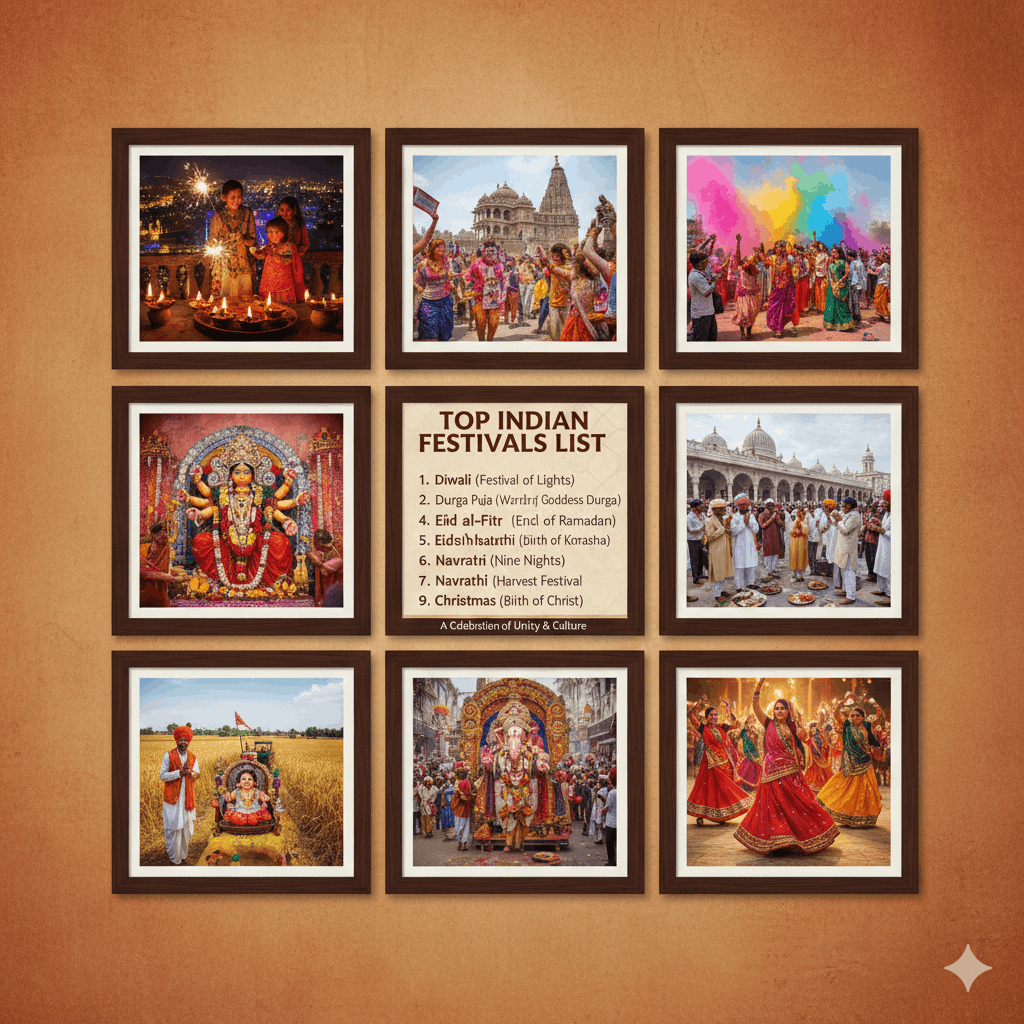
This is the core top Indian festivals list. The goal is not to cover every local event. The goal is to explain the festivals that shape the national conversation and the seasonal rhythm across states.
Diwali (Deepavali)
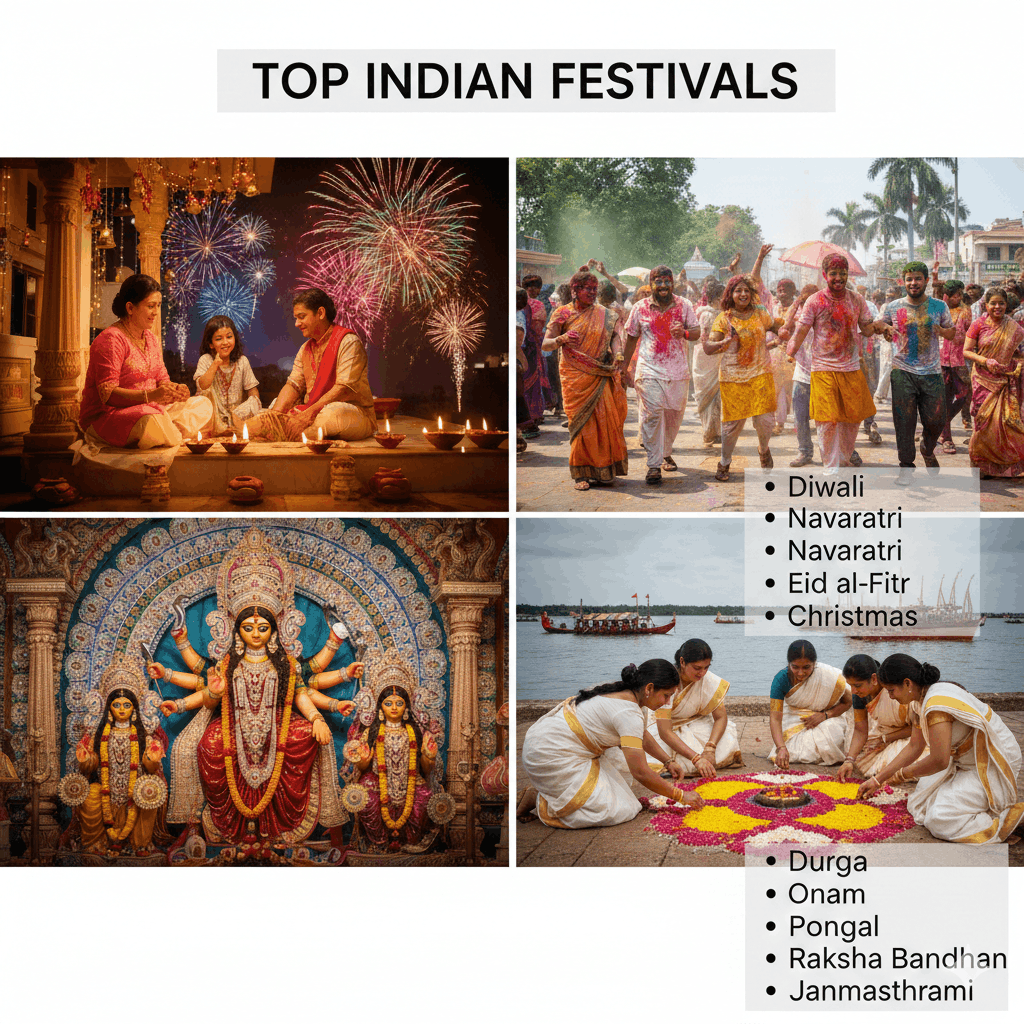
Diwali is often described as India’s festival of lights. It is widely celebrated across many parts of the country and among Indian communities worldwide. In many homes you will see oil lamps (diyas), rangoli patterns at the entrance, sweets shared with neighbors, and family prayer rituals.
What Diwali celebrates
Diwali carries different stories across regions, yet the theme is similar: light over darkness, good over harm, and hope over fear. In North India many people link it with the return of Lord Rama to Ayodhya. In other regions it connects with Goddess Lakshmi and prosperity prayers.
What you will see
In most cities, the build-up begins days earlier. Markets fill with decorative lights, sweets, gifts, and festival clothing. Homes get cleaned, families prepare traditional food, and entrances are decorated.
A first-time visitor note
Fireworks are common in many areas, so sound can be intense at night. If you are traveling with children or seniors, choose calmer neighborhoods for evenings. If you have breathing sensitivity, plan indoor time during peak fireworks hours in places where fireworks are heavy.
Diwali belongs on any top Indian festivals list since it is both widely observed and deeply tied to family life.
Holi
Holi is the festival many people recognize from photos: bright color powder, water splashes, and streets filled with music and laughter. It is joyful, chaotic, and social. It has a playful tone, yet it has religious meaning too.
What Holi celebrates
Holi is linked to the arrival of spring and stories connected to devotion and the triumph of faith. In many places, a bonfire ritual the night before marks the symbolic end of negative forces.
How it is celebrated
Morning celebrations often begin with friends, family, and neighbors applying color to each other. Many people carry small bags of powder, water balloons, or water guns in places where that style is common.
Where Holi feels most intense
Holi is strong in north India, with certain towns becoming famous for distinct styles and traditions. Still, it is celebrated in many cities and even in smaller communities.
Practical care for visitors
Wear simple clothes that can handle stains. Keep your phone in a sealed pouch. Use gentle color products if you plan to join a public crowd. Respect personal boundaries, especially in mixed crowds.
Holi earns its place on a top Indian festivals list due to how widely known it is and how strongly it shapes the spring mood.
Navratri and Durga Puja
This entry combines two connected celebrations that look very different across regions. Navratri is observed in many parts of India as nine nights of devotion to Goddess Durga in her forms. Durga Puja, especially in Kolkata, becomes a major cultural event with elaborate pandals (temporary themed structures), art, music, and community gatherings.
Durga Puja in Kolkata is inscribed on UNESCO’s Representative List of the Intangible Cultural Heritage of Humanity (inscribed in 2021). That recognition signals how significant the event is, not only as worship, yet as a living cultural practice.
Navratri: what you’ll notice
In Gujarat and parts of western India, Navratri is known for garba and dandiya dance nights. In many other regions, people fast or follow devotional routines at home or in temples.
Durga Puja: what you’ll notice
Kolkata’s Durga Puja turns neighborhoods into art galleries and cultural spaces. People walk for hours visiting pandals, trying festival food, and watching performances.
Tips for first-timers
Crowds can be dense, especially in Kolkata during peak nights. If you plan to visit, go early in the evening, keep your route planned, and leave extra time for slow movement.
This combined section belongs in a top Indian festivals list since it covers a major autumn season across many states.
Dussehra (Vijayadashami)
Dussehra marks the victory of good over harmful forces and is linked to stories from the Ramayana in many regions. It is often observed at the end of Navratri.
What happens during Dussehra
In many cities, you will see Ramlila performances (dramatic retellings of Rama’s story) leading up to Dussehra. On the main day, effigies of Ravana may be burned in public grounds, drawing large crowds.
Regional differences
In parts of South India, Vijayadashami is a day for worship of learning and arts, with children beginning studies or musicians honoring their instruments. In the north, the public performance tradition is more visible.
Visiting advice
Public grounds can get crowded. Reach early, pick a safe standing area, and keep an exit route in mind.
A top Indian festivals list feels incomplete without Dussehra since it shapes autumn festivities in many regions.
Ganesh Chaturthi
Ganesh Chaturthi celebrates Lord Ganesha, known as the remover of obstacles and a beloved figure in many households. The festival is famous for clay idols installed in homes and public pandals, with music, prayers, and community food.
What you will see
In many places, you will see neighborhoods hosting their own celebrations with decorated stages and daily prayer. The closing ritual often involves immersing the idol in water (visarjan) with processions and music.
Where it is especially famous
Maharashtra, especially Mumbai, is widely known for large-scale public pandals and processions. Many other states observe it in their own style too.
Safety and respect
Procession routes can be packed. If you are near immersion points, stay alert near water edges and avoid pushing toward the front. Respect local instructions during crowd movement.
Ganesh Chaturthi belongs on a top Indian festivals list since it blends devotion with community-scale celebration.
Onam
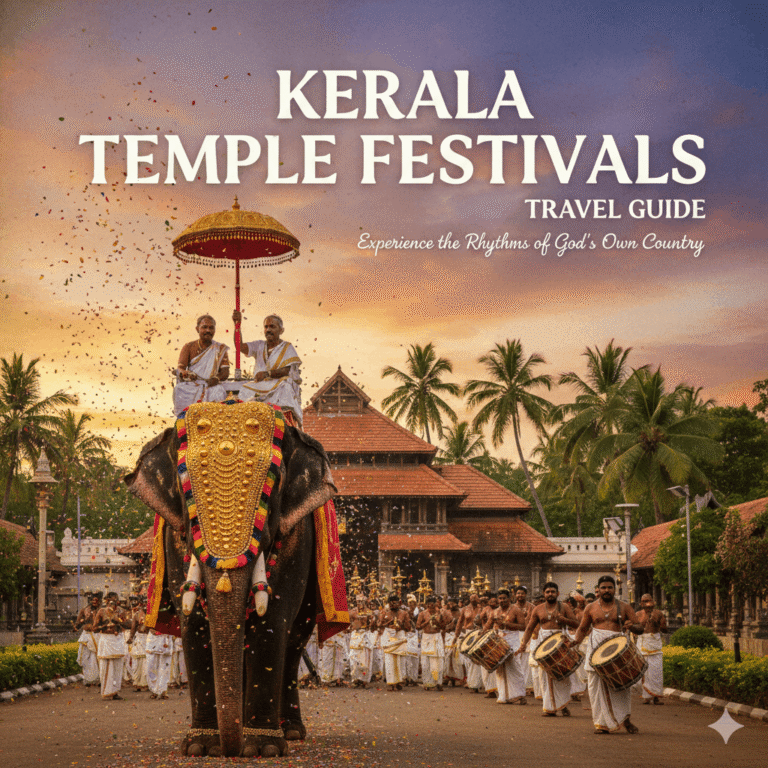
Onam is Kerala’s harvest festival and a major cultural season in the state. It is often linked to the story of King Mahabali and the annual return that symbolizes abundance, fairness, and joy.
What makes Onam special
Onam is famous for pookalam (flower carpets), traditional feasts known as Onam sadya, cultural programs, and community celebrations. In some places, you may see boat races and local sports events tied to the season.
What visitors love
Food is a highlight. The sadya meal is typically served on a banana leaf, with a range of dishes that balance sweet, sour, spicy, and mild flavors.
Planning notes
Kerala sees heavy travel demand during the season, so stays and transport can fill quickly. If you are visiting from outside Kerala, plan your route early.
Onam deserves a spot on any top Indian festivals list for its strong identity and state-wide celebration.
Pongal
Pongal is a harvest festival most strongly associated with Tamil Nadu. It is a gratitude-centered festival, focused on the sun, farming life, and seasonal abundance.
What Pongal looks like
The festival often involves cooking a sweet rice dish (pongal) that boils over as a sign of prosperity. You may see decorated homes, sugarcane in entrances, and small household rituals.
Village and city differences
In villages, the harvest connection feels very direct, with cattle decoration and community meals. In cities, family gatherings and cultural programs become more visible.
Visitor notes
Pongal is warm and community-centered. If you are invited into a home, simple respect and polite participation go a long way.
Pongal belongs in a top Indian festivals list since it represents one of India’s most important harvest traditions.
Baisakhi
Baisakhi is observed in Punjab and parts of North India as a harvest festival. It is deeply meaningful in Sikh tradition since it commemorates the formation of the Khalsa in 1699.
What you’ll experience
Baisakhi celebrations often include gurdwara visits, prayer, community meals (langar), and cultural performances like bhangra and gidda.
Etiquette for visitors
At gurdwaras, cover your head, remove shoes, and follow local guidance. Langar is a shared meal offered with humility and equality, so accept and behave respectfully.
Baisakhi earns a spot on a top Indian festivals list since it blends harvest gratitude with a major historical moment.
Eid al-Fitr
Eid al-Fitr marks the end of Ramadan, a month of fasting and prayer for Muslims. In India, Eid is observed with community prayers, family gatherings, and food traditions that vary by region.
What Eid looks like in Indian cities
Early morning prayer gatherings are common, followed by visits to relatives and neighbors. Food plays a major role, with many families preparing sweet dishes and festive meals.
Visitor guidance
If you are in a mixed community, greet people respectfully, dress modestly when visiting prayer spaces, and ask before photographing public prayer gatherings.
Eid belongs in a top Indian festivals list because it is widely observed across the country and shapes public life in many cities.
Kumbh Mela
Kumbh Mela is one of the world’s largest gatherings, centered on ritual bathing in sacred rivers. It moves between four main sites in a cycle, and each edition can draw enormous crowds.
Kumbh Mela is inscribed on UNESCO’s Representative List of the Intangible Cultural Heritage of Humanity (inscribed in 2017). That listing reflects its cultural weight and long-standing practice.
A peer-reviewed paper discussing Prayagraj Kumbh 2019 states that around 240 million pilgrims participated during that event. This number helps explain why Kumbh stands apart even within a top Indian festivals list.
What you’ll see
You will see large temporary town infrastructure, religious processions, spiritual teachers, devotional singing, and waves of people moving toward the river.
Planning and safety
Kumbh needs serious planning. Movement can be slow. Personal space can disappear. If you attend, keep your stay location clear, carry minimal valuables, and follow official crowd instructions.
Kumbh Mela sits in every serious top Indian festivals list because of its scale and its unique place in Indian religious life.
Why festivals matter for Indian travel and daily life
Festivals are not side events in India. They shape school schedules, office leave, market cycles, and travel demand. Domestic tourism numbers show how strong internal travel is in modern India, with 2,509.63 million domestic tourist visits reported provisionally for 2023. Even if your reason for travel is family, not sightseeing, festival timing often shapes when people move across states.
Festivals create the shared moments people remember: community meals, street lights, prayer gatherings, dance nights, and seasonal fairs. That is the deeper value behind a top Indian festivals list: it helps you understand the mood of the country in each season.
Respectful participation: simple etiquette that works almost everywhere
If you plan to attend public celebrations, a few habits keep things smooth.
Clothing and footwear
Dress modestly near prayer spaces. Comfortable shoes help in long walks. In some venues you may need to remove footwear, so wear easy-to-remove footwear.
Photography manners
Festivals bring a lot of photo opportunities, yet some moments are private. Ask before photographing people up close. Avoid flash near crowds or in prayer spaces.
Crowd awareness
Large events can shift quickly. Keep children close. Keep an exit plan in mind in big grounds, immersion routes, or river-front areas.
Food and water
Festival food is part of the experience. Choose busy stalls where food turnover is high. Carry drinking water in hot seasons.
Travel planning checklist for festival season
A top Indian festivals list becomes useful when it helps you plan, not just read.
Booking timing
For major festivals in major cities, stays can fill fast. Booking early can make the trip calmer.
Where to stay
Staying near the main celebration area saves travel time, yet it can be noisy. Staying slightly farther can be quieter, yet you need extra travel time.
Local transport timing
Festival traffic can be unpredictable. Reach early for major public grounds and river-front gatherings. Leaving right at peak closing time can take longer than expected.
Closing note
A top Indian festivals list is more than a set of names. It is a guide to how India marks time: through harvest, faith, community gathering, and seasonal change. Diwali and Holi show how celebration can take over an entire city. Navratri and Durga Puja show devotion and art living together in public spaces, with UNESCO recognizing Durga Puja in Kolkata as intangible cultural heritage. Kumbh Mela shows scale that is hard to imagine until you see it, with UNESCO listing it and research describing enormous participation numbers.
If you are learning Indian culture, start with this top Indian festivals list. If you are planning travel, use it as your seasonal map. Either way, it will help you understand what people celebrate and why those moments matter.