Chettikulangara Kumbha Bharani: Everything You Should See
Chettikulangara Kumbha Bharani is one of the most talked-about Devi temple celebrations in Kerala, known for its dramatic scale, intense rhythm, and the sense that an entire region is moving as one. People often search the name because they want a clear answer to three questions: what it is, when it happens, and what parts are worth seeing first if they have limited time.
This guide is written for first-time visitors and curious readers who want detail without confusion. You will learn what the Chettikulangara temple festival is, how the Kumbha Bharani festival date is set, and why the visuals of Chettikulangara Kettukazhcha and the Kuthiyottam ritual draw crowds year after year.
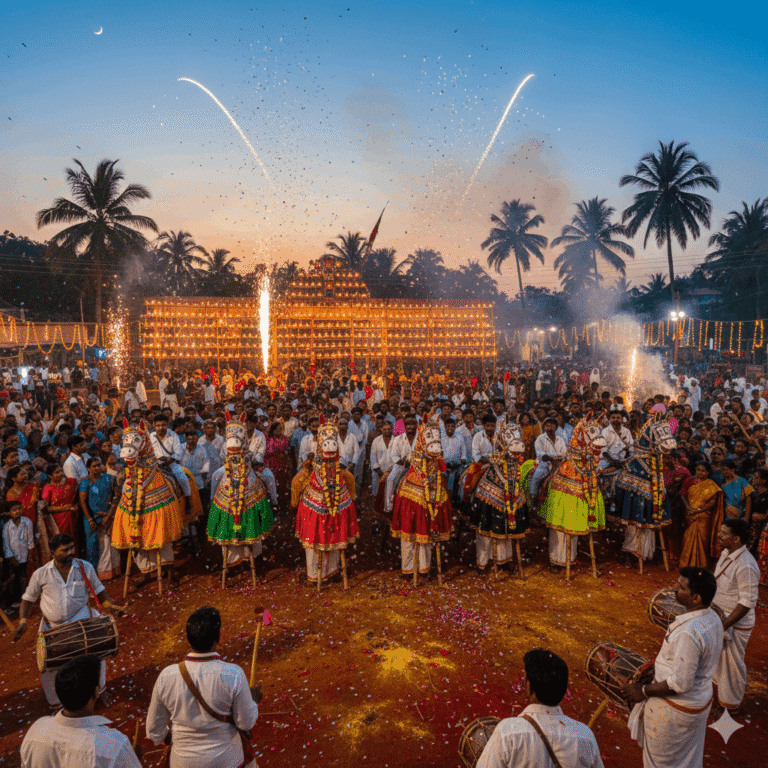
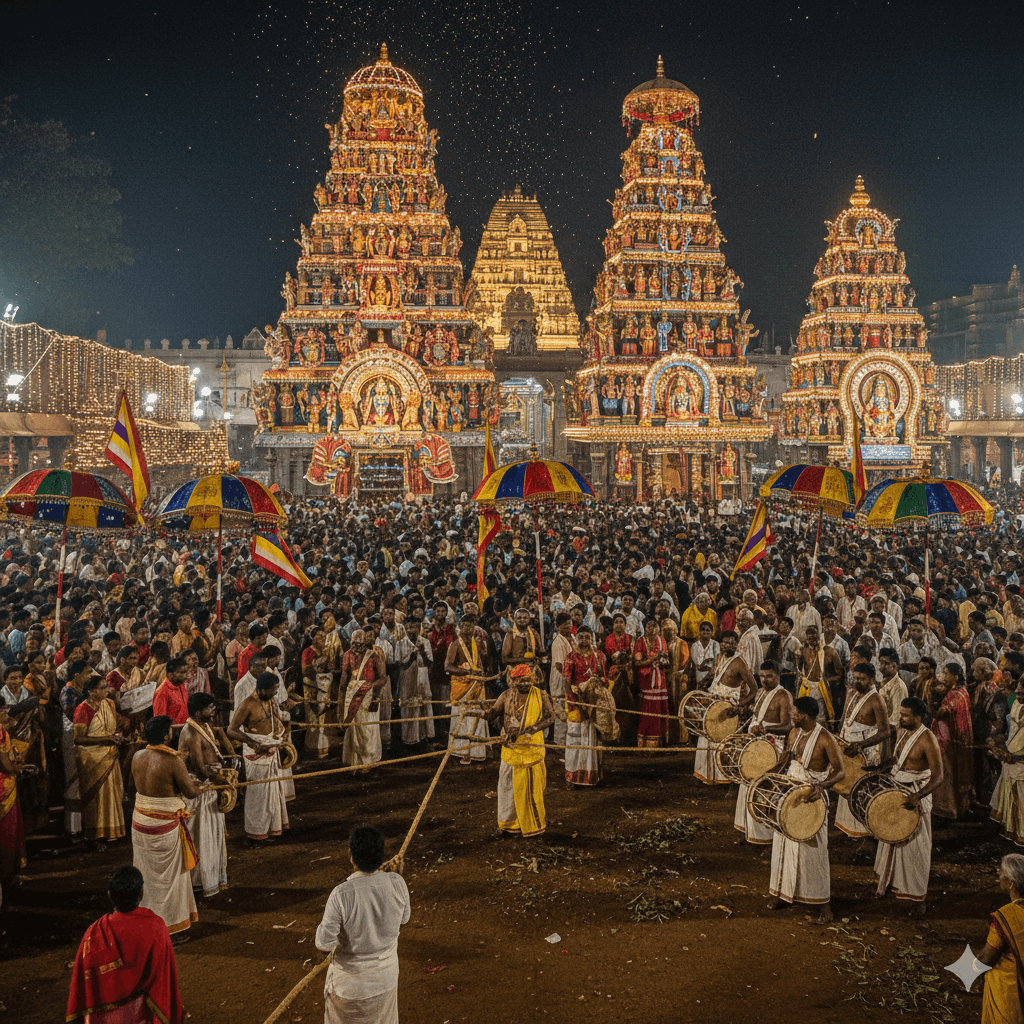
Chettikulangara Bharani is not a small temple event that stays inside the compound. It spills into open ground, roads, and viewing areas, turning the surrounding space into a living stage. The sounds, the pace, the craftsmanship, and the devotion are the main attraction. If you want to understand Kumbha Bharani Kerala in a way that feels real, focus on what people build, what they carry, and how the goddess is honored through movement.
What is Chettikulangara Kumbha Bharani?
Chettikulangara Kumbha Bharani is a Kerala Hindu festival connected to Chettikulangara Devi Temple, celebrated during the Malayalam month Kumbham. The festival is closely linked with Bharani nakshatra, which is why many people call it a Bharani nakshatra festival as much as a temple festival.
The name can look long, yet it’s easy to break down. Chettikulangara points to the temple and the place. Kumbha points to the season in the Malayalam calendar. Bharani points to the star day that gives the event its spiritual setting. Put together, the name signals a precise moment in the year when the temple’s rituals reach their peak.
Many locals simply say Chettikulangara Bharani, and everyone understands what that means. Online, you will see Kumbha Bharani festival used often because it helps distinguish it from other Bharani observances in Kerala.
Chettikulangara Devi Temple and the place around it
Chettikulangara Devi Temple sits in the region that many visitors connect with Mavelikara, in Alappuzha district. That is why people sometimes search Alappuzha temple festival alongside this event. The temple becomes the anchor point, yet the festival atmosphere spreads far beyond the inner courtyard.
The presiding deity is lovingly called Chettikulangara Amma. People speak of her as a motherly presence with a fierce protective side. That balance is part of the festival’s emotional tone: warmth, devotion, discipline, and a kind of intensity that rises as the main rituals approach.
Chettikulangara Bharani and Chettikulangara pooram
Some visitors look for Chettikulangara pooram and end up at Chettikulangara Kumbha Bharani pages. In Kerala, the word pooram often signals a temple festival with large gatherings and processions. Chettikulangara Bharani carries that crowd-and-procession energy in a strong way, even though the core identity of this festival is tied to Kumbham and Bharani.
If someone uses the phrase Chettikulangara pooram, they are usually pointing to the public scale, the crowd pull, and the major procession moments that define the day.
When does the Kumbha Bharani festival happen?
Chettikulangara festival dates change each year because the timing depends on the Malayalam calendar and the nakshatra cycle. People often expect a fixed date, yet that’s not how most temple calendar events work in Kerala. The month stays Kumbham, the star stays Bharani, and the exact day shifts.
This section helps you understand Kumbha month Bharani timing in a practical way so you can plan your visit and avoid last-minute confusion.
Kumbha month Bharani and the Bharani nakshatra festival setting
Kumbham usually falls in February and March in the Gregorian calendar. Bharani is a nakshatra with strong ritual associations, and in this temple context it frames the day’s offerings and procession rhythm.
Many Kerala temple festivals are built on this structure: a seasonal month and a star day. It keeps the celebration tied to a sacred time cycle that locals follow naturally. That cycle is one reason Kumbha Bharani Kerala draws repeated visits from families across generations.
How locals confirm Chettikulangara festival dates
Temple committees and local announcements confirm the final schedule. If you plan travel, check the local calendar early, then check again closer to the season. Festival timings can shift within the day too, based on ritual sequences and crowd movement.
For visitors, the safest approach is to plan for a full day and keep extra time for slow travel around the temple area.
Weather, daylight, and crowd timing
Kumbham season in Kerala can feel warm during the day, with a cooler feel at night compared with peak summer months. Large crowds mean heat feels stronger near the tightest viewing zones. Light clothing that stays modest is a good choice, and water helps during long waits.
Night viewing matters a lot for this festival. Many people come specifically for the evening atmosphere when lights, sound, and motion combine into a powerful scene.
Chettikulangara Kettukazhcha: the centerpiece most people come to see
Chettikulangara Kettukazhcha is the visual heart of this Chettikulangara temple festival. It’s one of those ritual displays that people remember years later because it looks unreal at first glance. Many festival visitors plan their entire day around seeing the Kettukazhcha procession at the right time and from a good viewing spot.
Kettukazhcha is connected with the karas, the local regions that prepare and present the structures as offerings. The pride is public, yet the devotional mood stays central.
What the Kettukazhcha procession looks like
The Kettukazhcha procession brings towering structures into the festival ground. The most recognized forms are the kuthira and the theru. The kuthira are horse structures, and the theru are chariots. You may hear people talk about iconic epic figures too, shown as large effigies during the festival display.
For many first-time visitors, the scale is the first shock. Descriptions often place the tallest structures in the 90 to 100 feet range, and other references place certain kuthira builds closer to the 70 to 75 feet range, depending on how the height is counted and which structure is being described. The takeaway is simple: they are extremely tall and made to dominate the skyline.
Kuthira structures: why horses lead the eye
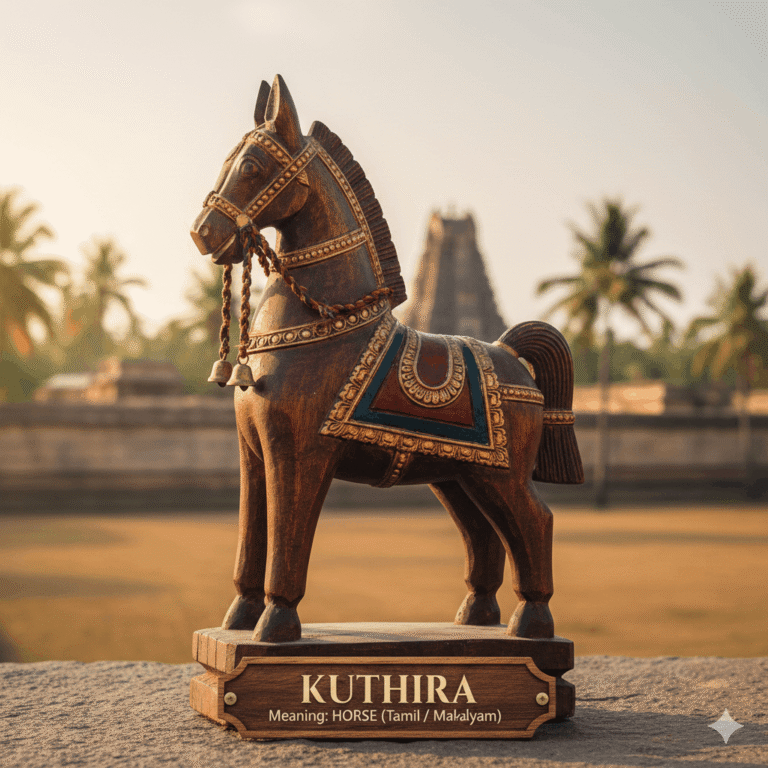
Chettikulangara Kettukazhcha includes kuthira that are meant to look alive from a distance. They are not “toy horses.” They are towering ritual forms with layered parts, sharp lines, and a strong silhouette.
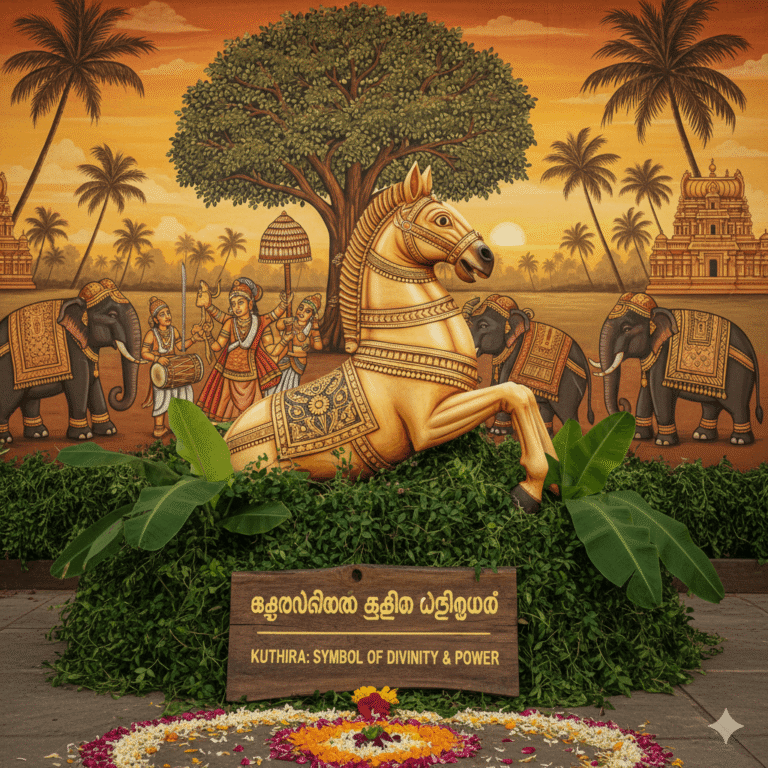
People who read about kuthira symbolism in Kerala will notice something: the horse fits this festival perfectly. A horse signals force, motion, and authority. In a public ritual, that symbolism reads instantly, even to someone who has never studied temple traditions.
Theru structures: chariots as ritual presence
Theru structures carry a different visual language. They look like ritual vehicles, a symbol of arrival and power held in form. When the kuthira and theru stand together, the scene feels like a public declaration of devotion from the communities that built them.
The role of the karas in Kettukazhcha
A key detail many readers want is the number of participating karas. Chettikulangara Bharani is strongly linked with 13 karas. The Kettukazhcha offering becomes a sign of each kara’s devotion and identity. The making of the structures is not a one-day task. Work begins long before the festival day.
This is one reason Chettikulangara Kumbha Bharani is often described as a Kerala cultural festival, not only a temple ritual. It brings together craftsmanship, planning, local leadership, and devotional discipline in one shared effort.
Craftsmanship details people notice up close
If you stand near a structure, you can see that the work is not rough. The layering, the edges, the joints, and the finishing show careful hands. Many local descriptions name the parts of a kuthira structure with technical terms. Visitors do not need to memorize those terms to appreciate the work, yet knowing that such a vocabulary exists tells you something: this is a craft tradition with its own rules, passed down through practice.
Night viewing: the moment that changes the mood
The day can feel busy and loud. The night often feels deeper. Lights shape the outlines of the structures. Sound carries farther. The crowd becomes a single moving body. Many visitors say the night display is the part that makes Chettikulangara Kumbha Bharani unforgettable.
If you only have time for one portion, aim for the main Kettukazhcha viewing and the night atmosphere around it. That is where the festival’s scale and emotion meet.
The Kuthiyottam ritual: devotion expressed through discipline
The Kuthiyottam ritual is another major reason people search Chettikulangara Kumbha Bharani. It is not a casual performance. It is treated as a serious offering. Visitors often feel the difference immediately, even without knowing the details.
This ritual involves young participants, often described in the 8 to 14 age range in common festival descriptions. Preparation includes training and devotional discipline. Families treat it with care and respect because it is tied to vows and temple faith.
What happens during Kuthiyottam
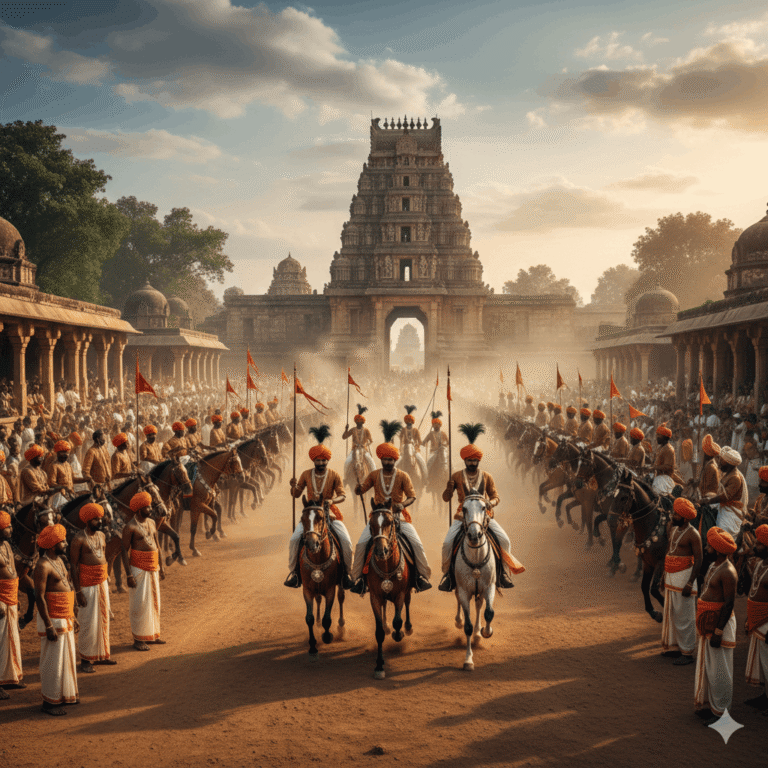
Kuthiyottam is often explained as a symbolic offering where the participants represent devoted attendants or soldiers of the goddess. The ritual has movement, rhythm, and a strict sequence that families and organizers follow closely.
As a visitor, the key is to watch without interrupting. Give space. Do not block the route. Keep your voice low near the ritual path.
Preparation: why it matters
People sometimes misunderstand temple rituals as spontaneous. Kuthiyottam is the opposite. It reflects commitment. The discipline is part of the meaning. That is why locals speak about it with seriousness.
Viewing with respect
If you want to witness Kuthiyottam ritual moments:
Stay slightly back from the tightest edge of the route.
Avoid sudden camera flash close to participants.
Let organizers and marshals guide movement.
Respect the family space around the participants.
These small choices help you experience the ritual in a way that feels aligned with the day’s devotional tone.
A first-timer’s route: what to see first and how to pace the day
Chettikulangara Kumbha Bharani can feel overwhelming if you arrive without a plan. The crowd moves slowly. Viewing areas fill fast. Sounds can be intense. A simple route approach helps.
Most visitors experience the day in phases: early build-up, main arrivals, evening rise, night peak, then the late movement.
Morning and early afternoon: arrive before the ground fills
Earlier hours are useful for getting your bearings. You can see the temple area, understand entry points, and choose a viewing plan. Early arrival helps with family comfort too, since you can find a calmer standing spot before the tight crowds form.
Late afternoon: the build-up becomes visible
As the day progresses, the gathering grows. The energy shifts from “people arriving” to “people waiting.” This is a good time to settle into your viewing position, especially if you want a strong view of the Kettukazhcha procession path.
Evening into night: the festival becomes cinematic
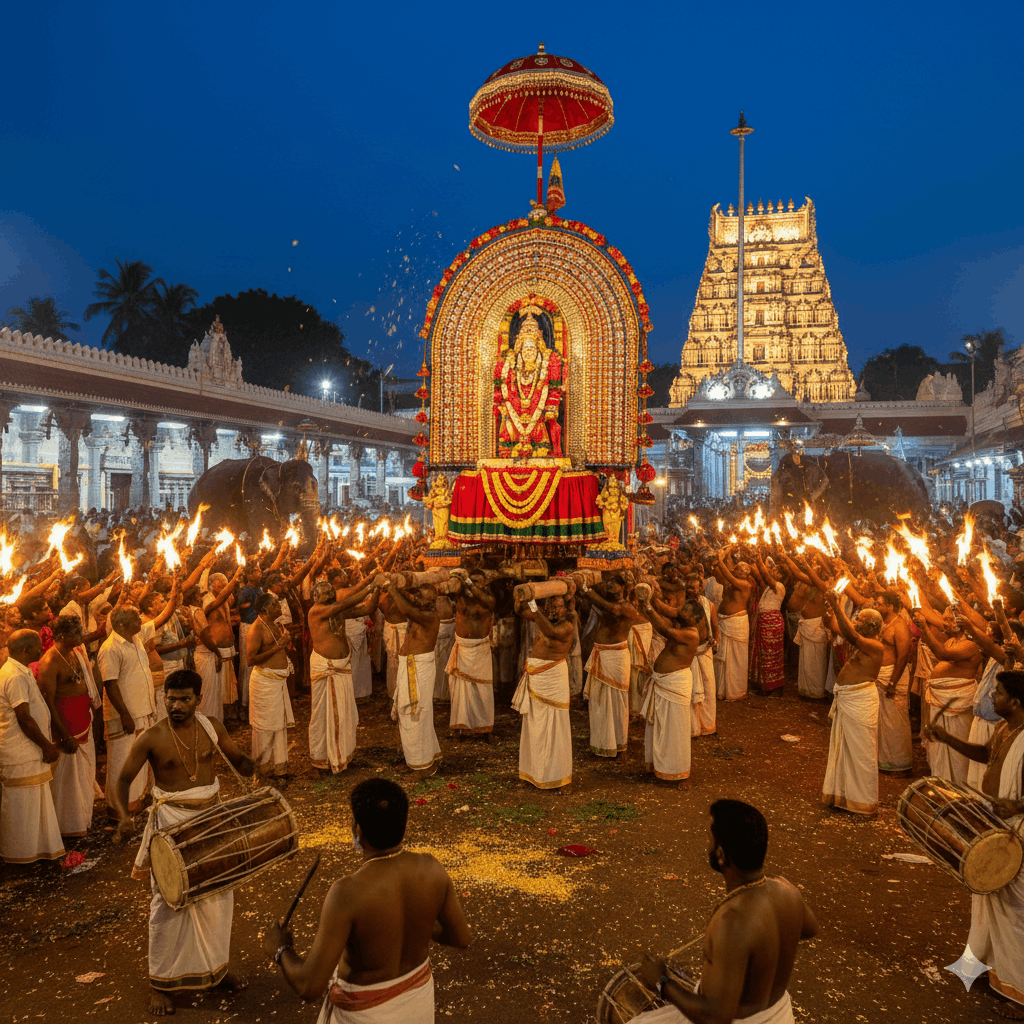
Night is where the structures and the crowd feel larger than life. The glow of lights on tall forms changes the visual texture of the ground. Drum rhythms and chants shape how the crowd moves.
Temple procession Kerala searches often come from people looking for this kind of experience: a public ritual that feels like it has its own pulse. Chettikulangara Kumbha Bharani delivers that in full.
Late night and return movement: patience matters
After the peak, the crowd disperses slowly. Roads can jam. If you are with kids or elders, consider leaving a bit earlier than the final rush. Many visitors prefer a calmer exit rather than staying until the very last moment.
Bharani festival significance: what the festival expresses beyond spectacle
Chettikulangara Bharani is famous for what you can see, yet the deeper meaning matters to locals. Bharani festival significance is tied to devotion, gratitude, protection, and community identity.
Chettikulangara Amma as the emotional center
Chettikulangara Amma is not treated as a distant figure. Devotees speak to her like a mother. The offerings, the discipline, the sound, the procession routes, and the crafted forms are ways of showing devotion in public space.
People come with vows. People come with prayers for family wellbeing. People come with gratitude. That emotional layer is the reason the festival remains strong year after year.
Traditional Kerala rituals and the culture of shared work
Traditional Kerala rituals often involve collective work. The making of the Kettukazhcha structures, the organization of procession routes, and the coordination of large crowds require many hands. This shared effort is part of the ritual itself.
Chettikulangara Kumbha Bharani shows how a ritual can be devotional and community-built at the same time. That is why many call it a Kerala cultural festival. It holds religious meaning, yet it is equally a living cultural practice built through craftsmanship and cooperation.
Identity and the 13 karas
The karas are central to how the festival is remembered. People recognize the offerings as a sign of each kara’s devotion and pride. The result is a festival that feels rooted in place. It is not a “floating event” that can be moved anywhere. It belongs to this community and this temple setting.
Practical guide for visiting Chettikulangara Kumbha Bharani
This part is written for visitors who want clarity without overthinking. It covers crowd comfort, etiquette, and the things that make the day smoother.
Getting there and moving around the area
Chettikulangara Devi Temple is commonly approached from the Mavelikara area, with visitors coming from many parts of Kerala. During festival hours, nearby roads can be packed.
If you can, arrive early. Keep your transport plan flexible. Expect slow traffic near the temple zone. Many people treat this as normal festival movement, not a problem. Planning your day with extra time removes stress.
Best viewing approach for Kettukazhcha
The best view depends on what you want.
If you want scale, stand farther back so you can see the full height.
If you want detail, stand near the side where you can see finishing work and movement without getting trapped.
Avoid the tightest center zone if you are with children or elders. A slightly wider edge gives a better experience and easier exit.
Dress and behavior inside a Kerala Hindu festival setting
Kerala Hindu festival etiquette is simple: modest clothing, calm conduct near ritual routes, and respect for instructions from temple volunteers.
Footwear rules depend on where you are. Inside certain temple zones, footwear may not be allowed. Carry a small bag if you need to keep shoes with you, and follow the local signs and guidance.
Photography with respect
You can take photos, yet avoid blocking routes. Avoid stepping into ritual paths for a better angle. Avoid flash close to participants in Kuthiyottam ritual moments.
If you want portraits of individuals, ask politely. Many people are open to it, yet festival day is not a studio environment. A respectful approach keeps the mood positive.
Family safety and comfort tips
Pick a meeting point in case someone gets separated.
Keep a small bottle of water.
Carry a light snack for kids.
Keep phones charged.
Avoid pushing into dense crowd pockets.
These are simple, yet they make a long day more comfortable.
What visitors often miss: the smaller details that complete the experience
Many first-time visitors focus only on the tallest structures and the loudest moments. The day has smaller details that add meaning.
The feeling of the ground during peak hours
At peak hours, the ground has a rhythm. People move in waves. They pause. They shift. They watch the same point together. That shared attention is part of the ritual space, even for visitors who do not share the faith.
The quiet seriousness around Kuthiyottam
The Kettukazhcha can feel like public grandeur. The Kuthiyottam ritual can feel intimate in its seriousness, even inside a huge crowd. Watching how families and volunteers protect that seriousness teaches you a lot about traditional Kerala rituals.
The transition from day to night
In many Kerala temple festivals, night is not an “extra part.” It is the moment where the ritual atmosphere reaches its strongest point. Chettikulangara Bharani follows that pattern. If you leave too early, you may miss the shift that makes the day feel complete.
Final thoughts
Chettikulangara Kumbha Bharani stands out in Kerala’s festival calendar because it combines towering craftsmanship, disciplined ritual practice, and a public devotion that feels deeply rooted in place. The Chettikulangara Kettukazhcha display shows what community work can build when devotion and craft meet. The Kuthiyottam ritual shows how discipline can become an offering. The night atmosphere ties it together, turning the festival ground into a moving ritual world.
If your goal is to see the heart of this Alappuzha temple festival, plan around the main procession hours, give yourself time for night viewing, and treat the day with respect. Chettikulangara Amma is central to the emotional meaning people carry into the festival, and understanding that makes everything you see feel clearer and more connected.