Kerala Wooden Horse Festivals: Ritual Processions, Folk Art, and the Craft Behind Kuthira Traditions
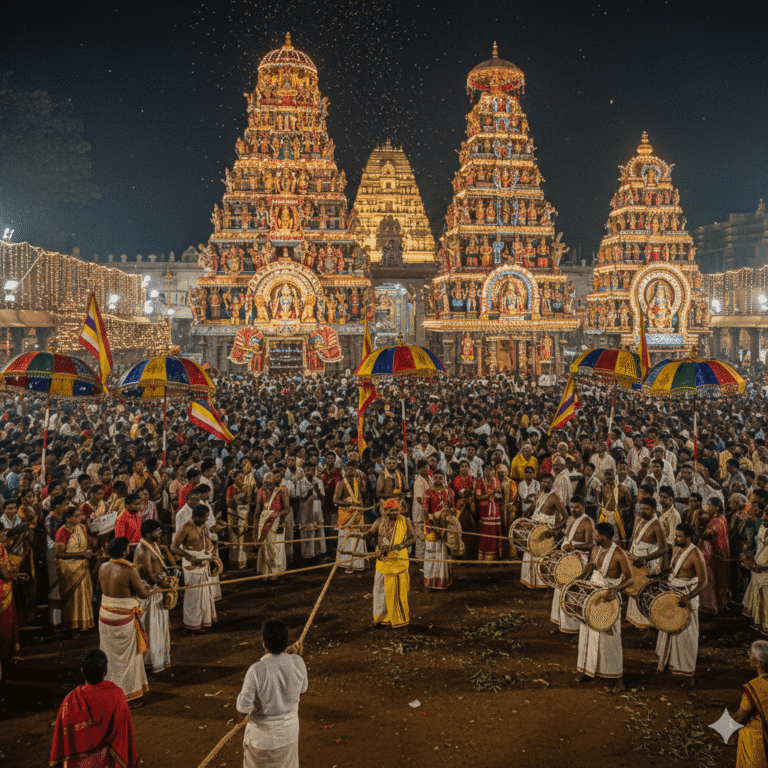
Kerala wooden horse festivals feel different from the “festival” idea many travelers carry in their head. You are not just watching a show. You are stepping into a living village rhythm where people prepare for weeks, sometimes months, for one procession day. The wooden horse becomes a moving symbol of faith, pride, and community effort. It is art you can hear, because drums and chants shape the pace. It is ritual you can feel, because the crowd’s silence at key moments tells you something sacred is happening.
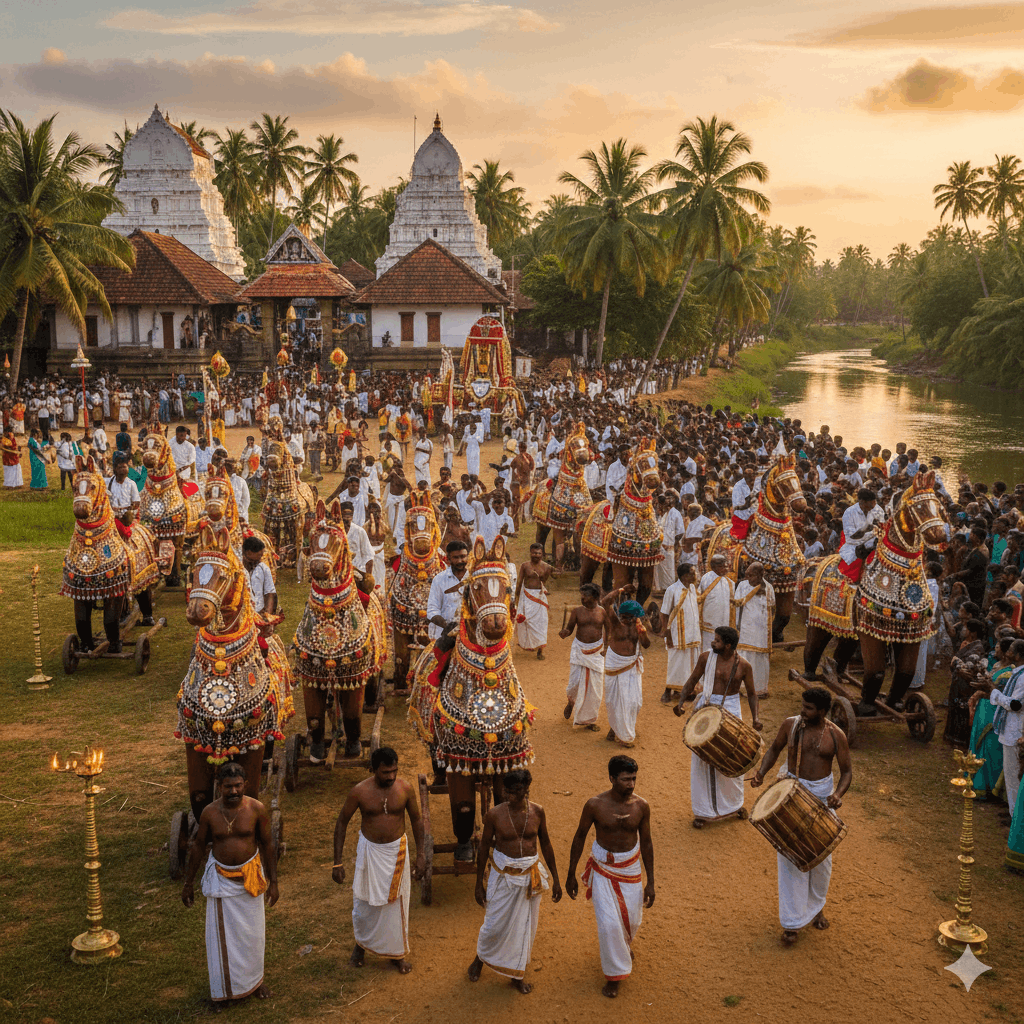
When people search Kerala wooden horse or Kuthira festival Kerala, they are usually trying to name a tradition they have seen in photos: a large horse form, decorated and carried or displayed during Kerala temple festivals. Many also search Kuthira Kettam festival or Kuthira Kettam ritual because the words point to “horse display” or “horse set-up” in everyday talk, even though the exact local label changes by place. A strong guide has one job: clear the confusion without flattening the culture.
This article covers the full niche: what ritual wooden horses look like, how a wooden horse procession works, why temple ritual decorations matter, how artisans build traditional wooden horse art, and how visitors can experience village festivals in Kerala with respect. Along the way, you will see how folk art of Kerala and Kerala heritage art sit inside the same festival space, carried forward as traditional festival artifacts that still make sense to modern communities.
What “Kerala wooden horse” actually refers to
Kerala wooden horse is a broad search phrase. It can point to more than one tradition:
- A decorated horse effigy carried or presented during traditional temple processions
- A display connected to a temple festival where the horse form acts as a ritual object
- A local horse-related ritual people summarize as wooden horse worship
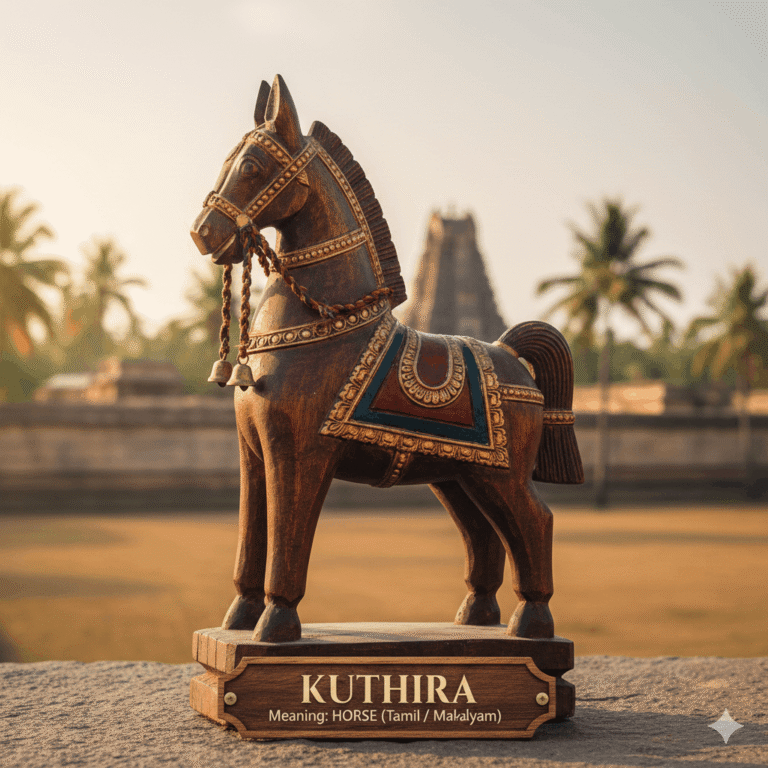
- A craft tradition where a handcrafted wooden horse is built as a festival artifact
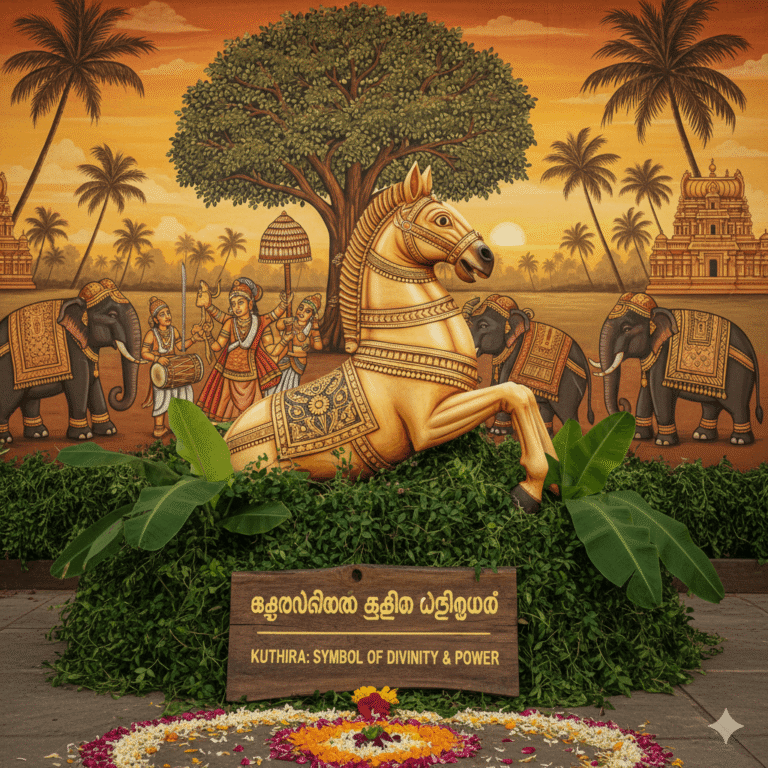
In Kerala folk traditions, the horse image often appears as a strong, upright form. It can represent protection, power, readiness, and village identity. That does not mean every festival explains it the same way. Some places treat the horse as an offering, some treat it as a symbol that “stands guard” in a sacred zone, and some treat it as a memory of older martial culture that became ceremonial over time.
What stays consistent is the social role. The horse is rarely just decoration. It is a shared project, made by artisan wooden crafts Kerala teams or by skilled local groups that know the build process. Even the act of bringing the horse to the street can be part of the ritual.
Kerala wooden horse festivals inside Kerala temple festivals
Kerala temple festivals are not only temple-centered worship days. In many towns, the temple is the community’s anchor, so festivals become the season when craft, music, food, and storytelling come alive. That is why Kerala cultural festivals often overlap with religious folk rituals Kerala.
The festival space is built in layers
A typical festival day holds layers that visitors often miss:
The worship layer
This includes temple timing, priest-led steps, and ritual cues. That is where temple ritual decorations matter, because garlands, lamps, cloth, and canopy elements show which deity day is being observed.
The procession layer
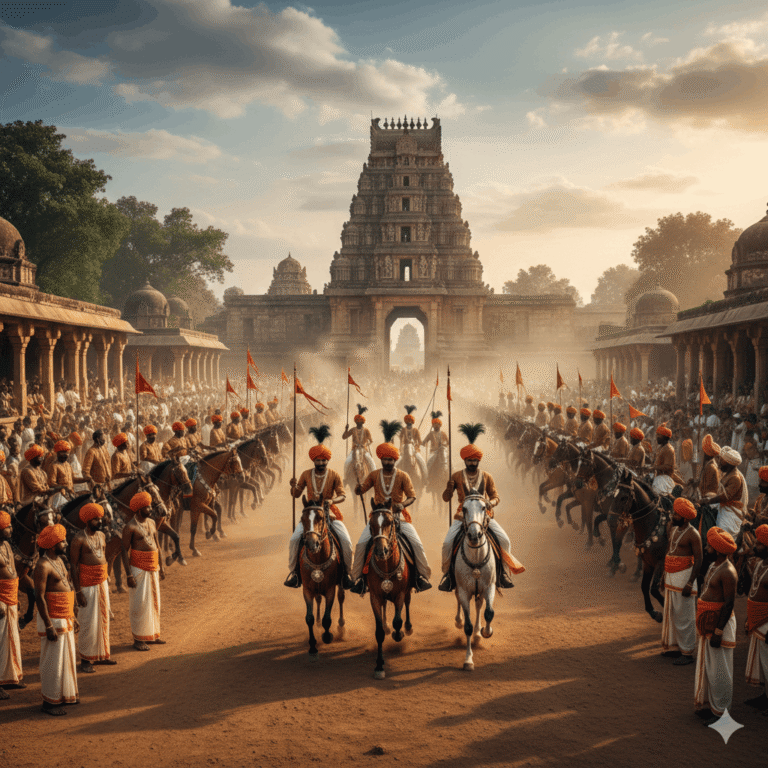
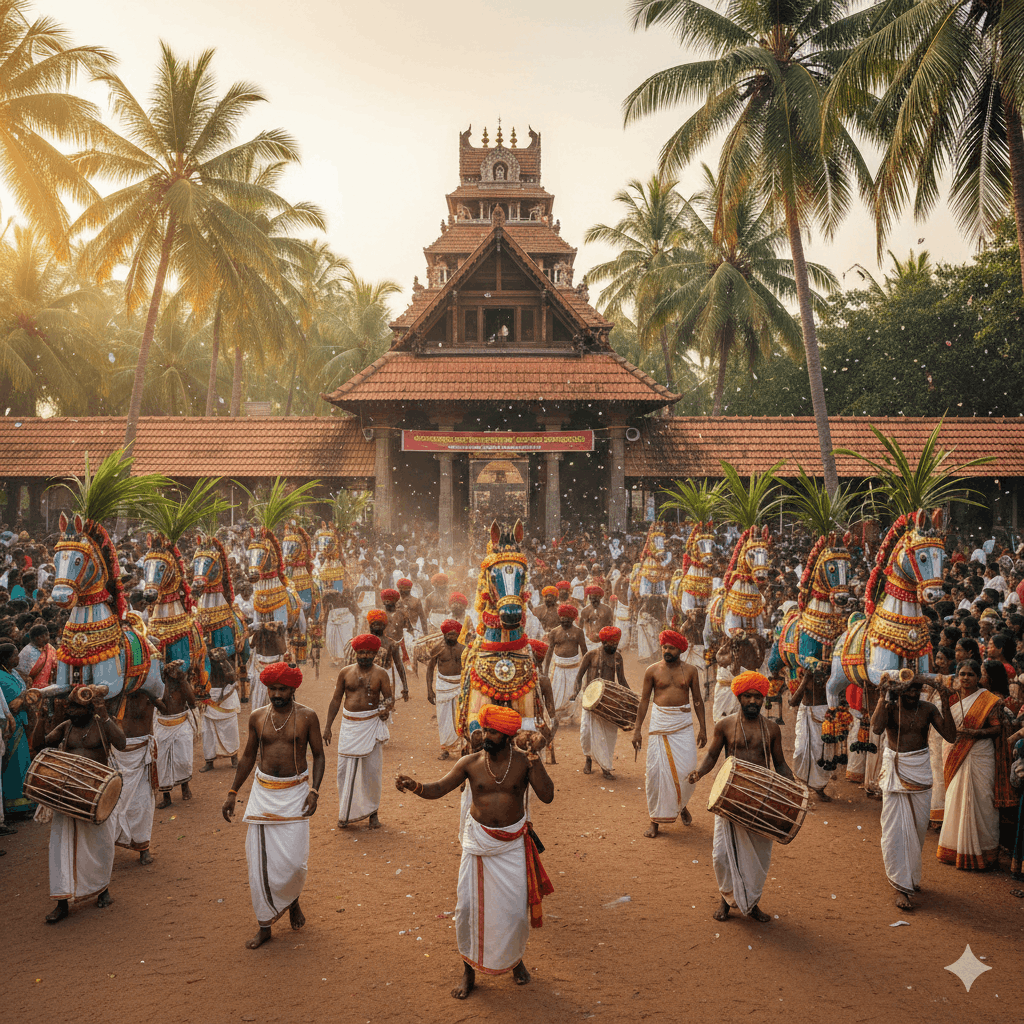
This is the public movement. The wooden horse procession, percussion groups, and community teams move through streets in an order locals recognize. Sometimes the horse appears early, sometimes it arrives later as the “main moment.”
The craft layer
Traditional wooden horse art is built to survive movement. That means strong frames, good balance, and safe carrying points. Many visitors call it “wooden sculpture,” but it behaves more like a festival structure that must handle strain, wind, and heat.
The identity layer
Village festivals in Kerala often involve group rivalries that stay friendly but intense. Each group wants their display to look better, stand taller, move cleaner, and receive louder applause. That pride is part of why Kerala festival rituals remain strong even now.
Kuthira festival Kerala: common experiences people mean
Kuthira festival Kerala is another broad phrase. People use it to describe three main experiences.
1) Horse effigies and decorated horse displays
This is the wooden horse festival idea most people have: a large horse form, often with colorful coverings, ornaments, and a distinctive head.
2) Kettukazhcha-style festival displays
Some Kerala festivals are famous for large, crafted structures and processional displays. The horse can be part of that visual tradition, even if the festival is not “only about horses.”
3) Horse races that get mixed into search results
Kerala also has horse race celebrations that visitors confuse with wooden horse festivals. A clear guide should separate these categories so readers do not plan the wrong trip.
Kuthira Kettam festival and Kuthira Kettam ritual: why the name confuses people
Many readers land on this topic through Kuthira Kettam festival or Kuthira Kettam ritual searches. The confusion happens because “kettam” can sound like “set-up” or “display” in casual usage. People might use it as a shortcut for “that horse thing we saw in a temple festival.”
So what should you do in content?
Treat it as a search phrase, not a single fixed event name
Write it as a clarification section. Explain that Kuthira Kettam festival is often used online as a blanket phrase for horse-effigy traditions, and then give readers the clearer sub-terms and festival types they should look for.
Give the reader a quick definition
A simple framing works:
- Kuthira Kettam ritual: a horse display or horse-effigy ritual within a temple festival setting
- Wooden horse worship: devotional meaning attached to the horse structure and the offering around it
- Traditional festival artifacts: crafted items built for festival identity and ritual use, not only decoration
This style keeps your content honest while still matching what the searcher typed.
What a wooden horse procession looks like in real life
People often picture a quiet parade. Kerala does not do quiet parades.
A wooden horse procession is a moving performance space. You may see:
- Drum ensembles building tempo as the procession nears
- Fire torches or lamps in evening processions
- Teams adjusting the horse structure mid-walk for balance
- Devotees stepping aside for ritual moments
- A sudden hush when the horse reaches a temple-linked point
The horse itself can be carried, rolled, or lifted in a method that depends on local style. Even when the horse is not literally carved from a single tree trunk, the visible wood framework and traditional build style still earns it the “wooden horse” label in common speech.
Ritual wooden horses are not props
Ritual wooden horses are treated with care. People avoid touching certain parts. Teams might have strict rules about who can handle the structure. It is common for older community members to guide younger teams, so skill and discipline pass down naturally.
Temple ritual decorations change the whole look
Temple ritual decorations are not random. Colors, cloth, and ornaments often match the festival’s devotional theme. Some decorations are meant to stand out under lamps at night; others are made to shine under harsh noon sun. When your article explains this, you do more than describe visuals. You describe meaning.
Traditional wooden horse art: how these festival horses are made
Traditional wooden horse art sits at the intersection of craft and ritual. A festival horse must be:
- visually striking
- stable while moving
- strong enough for carrying or lifting
- repairable during festival season
- safe for the crowd around it
That is why artisan wooden crafts Kerala work is as important as the ritual itself.
The craft backbone: wood carving traditions Kerala
Wood carving traditions Kerala are famous in many temple-linked art forms, from door panels to shrine carvings. Festival horses borrow from that visual language: bold shapes, strong lines, and symbolic decorations. Even when the horse is made with a frame-and-skin style (wood frame, cloth or decorative covering), the craftsmanship still relies on carpentry skill, proportion, and tradition.
Common build stages (without turning this into a technical manual)
A handcrafted wooden horse typically moves through stages:
Design and measurement
Teams plan the horse height, head shape, neck angle, and carrying points. Some groups follow older patterns passed down. Others adjust designs to improve balance.
Frame build and joinery
Wooden supports are joined to form a stable skeleton. The frame must distribute weight so the structure does not sway dangerously.
H4: Surface and decoration
This is where folk art of Kerala shows up strongly. Cloth layers, paint, ornaments, and symbolic elements transform the frame into a festival creature.
Final testing
The team tests movement, lifting, and street turns. This is where Kerala festival rituals meet practical safety.
Traditional festival artifacts and community pride
Traditional festival artifacts like wooden horses are not disposable crafts. Even when parts are replaced, the identity of the horse often remains. Some villages speak about their horse as if it has personality. That emotional link is part of why Kerala cultural festivals stay deeply rooted in community life.
Folk art of Kerala inside wooden horse festivals
Folk art of Kerala is not limited to gallery pieces. It often lives in festival work:
- painting styles used for decoration
- costume design in accompanying performances
- rhythmic traditions in processional music
- symbolic motifs that repeat across villages
Kerala folk traditions shape the horse’s visual language
Kerala folk traditions are not written like textbooks for the average festival volunteer. They are learned by doing. A young volunteer might start by tying cloth knots or handling small decorations. Over years, they learn structure, proportion, and ritual timing.
Kerala heritage art in motion
Kerala heritage art is often thought of as “old.” Wooden horse festivals prove it is alive. The horse is built with older visual cues but moves through modern streets, modern crowds, and modern photography. That mix is part of its power.
Wooden horse worship: devotional meaning without overstatement
Wooden horse worship can sound strange to outsiders because people imagine worship directed at the horse itself. In practice, what happens is more nuanced.
For many devotees, the horse is:
- a ritual offering
- a symbol presented to the deity
- a community vow made visible
- a protective emblem linked to temple identity
The horse may be treated with reverence because it is tied to a vow or offering. The respect is real, but the focus remains on the temple’s divine center.
Religious folk rituals Kerala and shared responsibility
Religious folk rituals Kerala often carry a “shared responsibility” style. Each group has tasks. Some handle percussion, some manage crowd flow, some handle the horse, and some handle lamp rituals. A well-written article should show that festivals are organized, not chaotic.
Where you are most likely to see Kerala wooden horse festivals
This topic becomes stronger for search when your content names the settings readers should look for, even if they are not searching a single festival name yet.
Temple-linked villages and small towns
Village festivals in Kerala often deliver the most intense wooden horse experiences because:
- the whole town feels involved
- streets are narrower, so the procession feels close
- community teams compete in presentation quality
- traditions stay more consistent year to year
Festivals known for horse-effigy displays
Some Kerala temple festivals are widely recognized for decorated horse forms, while others feature horses as part of a broader display tradition. In your website strategy, it helps to publish supporting pages for the biggest named festivals and then link them back to this hub.
A clean cluster structure can look like:
- a hub page on Kerala wooden horse festivals
- separate pages on major horse-effigy traditions in Kerala
- separate pages on major temple display traditions that include horses
This approach matches how people search: broad first, specific later.
How to plan a visit to a wooden horse festival day
A good travel section does not need a long checklist. It needs clarity.
Timing expectations
Many Kerala festival rituals follow a day structure:
- early worship steps in the temple space
- procession build-up and music volume rising
- peak crowd hours when the horse arrives or moves through the key street
- late-night rituals in some festivals
The exact schedule varies, so your best move as a content creator is to explain the pattern and tell readers to check local announcements for day-specific timing.
What to wear and what to carry
In Kerala temple festivals, comfort matters:
- breathable clothing
- footwear you can remove quickly if needed
- water, especially for daytime processions
- a small cloth or scarf useful for sun
Where to stand during a wooden horse procession
Your content should guide without sounding strict:
- stand near open corners where the horse can turn
- avoid the tightest center points during peak movement
- leave space around carrying teams
- ask locals where the “main arrival” tends to happen
Photography etiquette
This niche attracts photographers. A respectful rule set keeps both visitors and locals happy:
- do not block carrying teams
- avoid flash in tight temple-linked zones
- avoid pushing into ritual circles
- take cues from locals when silence is expected
Common confusion: wooden horse festivals vs other Kerala festival icons
Many readers mix up festival categories because Kerala has multiple strong visual traditions.
Wooden horse displays vs elephant processions
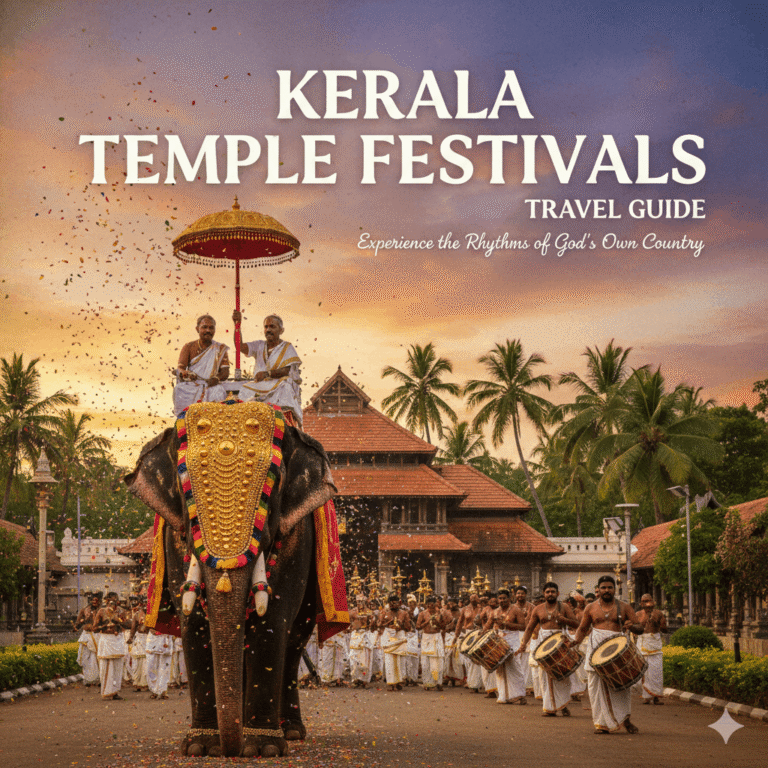
Kerala is famous for elephant-led temple processions in some regions. Wooden horse festivals are a different lane. Your article should help readers understand that the “main icon” changes by festival tradition.
Wooden horse festivals vs horse race celebrations
Horse races have their own culture, often linked to specific local celebrations. A reader searching Kuthira festival Kerala might stumble into horse race content by mistake. A short clarification keeps your page relevant and prevents early exits.
Why this niche ranks well when written properly
Kerala wooden horse festivals is a topic where most pages online either:
- stay too vague, or
- throw festival names without explaining the experience, or
- focus on travel only and ignore craft, or
- focus on ritual only and ignore the visitor’s practical needs
Your page can win by covering the full cycle:
- meaning and context (Kerala folk traditions, Kerala cultural festivals)
- the real-life street experience (wooden horse procession, traditional temple processions)
- craft and build (traditional wooden horse art, wood carving traditions Kerala, artisan wooden crafts Kerala)
- ritual and etiquette (religious folk rituals Kerala, temple ritual decorations, Kerala festival rituals)
- festival artifacts and identity (traditional festival artifacts, Kerala heritage art)
That full coverage keeps people reading, which is exactly what search engines look for when deciding if your page truly answers the query.
A simple content structure you can reuse on your website
If you are building a content hub around this niche, use a consistent structure:
Start with the definition
Use the exact phrase Kerala wooden horse festivals early, then unpack what it includes.
Add a “local terms” block
Include Kuthira Kettam ritual and Kuthira Kettam festival as search phrases people use, then map them to clearer festival language.
Explain the craft
Use traditional wooden horse art, handcrafted wooden horse, artisan wooden crafts Kerala, wood carving traditions Kerala.
Add “what you’ll see”
Use wooden horse procession, temple ritual decorations, traditional temple processions.
Add travel tips
Use village festivals in Kerala, Kerala temple festivals, Kerala cultural festivals.
This keeps your SEO clean and your reader experience smooth.
Closing notes
Kerala wooden horse festivals are not one single event. They are a family of traditions where the horse form becomes a moving piece of Kerala heritage art, carried through streets as part of Kerala temple festivals and Kerala cultural festivals. The horse is built through artisan wooden crafts Kerala skill, shaped by wood carving traditions Kerala, and presented through Kerala festival rituals that still hold meaning for the communities that host them.
If your website treats this niche with clarity, respect, and detail, it can rank because it answers what people are truly asking: what the Kerala wooden horse is, where it appears, how it is made, and what it feels like to witness it in a real village setting.